
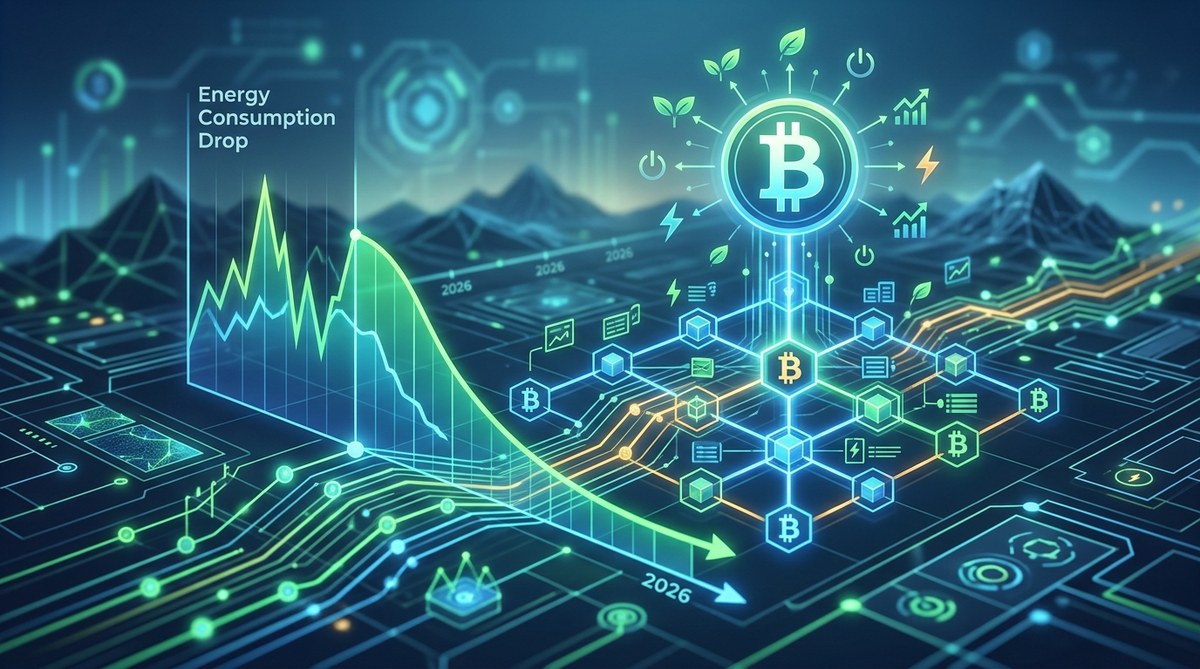
For years, critics pointed to Bitcoin’s energy consumption as its biggest flaw. They argued that a digital currency securing transactions with raw computing power could never be sustainable. But something changed in 2026. The data shows a clear drop in Bitcoin energy consumption, even while the network remained incredibly secure and active. This isn’t a sign of weakness. It is a signal that Bitcoin is maturing into one of the most efficient financial networks on the planet.
Bitcoin’s energy consumption dropped sharply in 2026. This decline is driven by widespread adoption of next-generation 3nm ASIC miners, advanced immersion cooling systems, and a strategic shift toward stranded renewable energy sources like hydro and solar. Network security remains at an all time high, proving that energy efficiency and robust proof of work can coexist. For investors, this trend significantly reduces long-standing ESG concerns. For researchers, it provides a crucial new efficiency baseline for modeling the global Bitcoin network’s future carbon footprint.
The Numbers Behind the 2026 Decline
The shift is dramatic when you look at the data. In previous years, energy use climbed alongside price and hashrate. That pattern broke in 2026. Efficiency improvements finally outpaced network growth.
| Metric | 2022-2024 Average | 2026 Estimate | Change |
|---|---|---|---|
| Annualized TWh | 150 – 170 | 110 – 130 | -20% to -25% |
| Avg. Miner Efficiency (J/TH) | 35 – 45 | 15 – 20 | -50% |
| Sustainable Energy Mix | 55% | 65%+ | +10% |
| Network Security (Hashrate) | 400 EH/s | 800 EH/s | +100% |
The table tells a powerful story. The network is twice as secure as it was two years ago, but it uses a quarter less energy. This is the result of engineers and miners solving a hard problem. They built hardware that does more with less power. They also moved operations to cheaper, cleaner energy sources. The days of assuming Bitcoin’s energy use will just keep climbing are over.
Why Hashrate Growth Doesn’t Always Mean More Energy Use
A common myth is that a rising hashrate automatically means rising energy bills. That was true ten years ago. In 2026, it is outdated thinking. The relationship is not linear anymore. You can double the amount of computing power on the network without doubling the electricity draw. This is a fundamental shift in how we should think about understanding the relationship between hashrate and network health.
Modern mining rigs are incredibly efficient. The jump from 7nm chips to 3nm and even 2nm chips has been a game changer for the industry. These chips process more hashes per watt of electricity. Old machines that were power hogs have been retired. They went offline permanently because they could no longer compete. The network is now running on the most efficient hardware ever built.
“The efficiency gains in Bitcoin mining are outpacing the growth of the hashrate for the first time,” says Dr. Elena Rossi, a blockchain energy researcher at Stanford. “We are seeing a structural decoupling of security and energy consumption. This is the green revolution no one expected from proof of work.”
This decoupling is exactly what environmental researchers have been waiting for. It proves that Bitcoin’s security model can thrive without demanding a constantly increasing share of global electricity.
Key Factors Driving the Efficiency Leap
The drop in energy use did not happen by accident. It is the result of several concrete changes in the industry. Here are the main drivers:
- Advanced Chip Manufacturing: Miners adopted 3nm and 2nm ASICs at a record pace. These chips offer double the performance at half the power.
- Immersion Cooling: Traditional fan-based systems waste energy on cooling. Immersion cooling uses a liquid bath to keep chips cool. It cuts total facility power use by 15% to 20%.
- Stranded Renewable Energy: Mining operations moved to remote locations with excess hydro, solar, and wind power. This energy was previously wasted because there were no buyers. Now it powers the network.
- Grid Balancing Services: Large mining farms now participate in demand response programs. They automatically shut down during peak grid hours and return power to local communities. This reduces their overall carbon footprint.
- Flaring Mitigation Projects: Miners are using natural gas that would otherwise be burned off at oil wells. This turns a waste product into a productive asset.
These factors work together. They make the network stronger and leaner. You can see how these operational changes affect price cycles by analyzing Bitcoin market cycles for better investment timing.
What This Means for Investors and Researchers
How can you verify these trends for yourself? The data is public and transparent. You do not have to take anyone’s word for it. Here are three practical steps you can take today:
- Track the Cambridge Index. The Cambridge Bitcoin Electricity Consumption Index is the most reliable source for network energy estimates. Check it monthly to see the trend for yourself.
- Review Public Miner Disclosures. US-based mining companies like Marathon and Riot publish detailed energy reports. Look at their efficiency in Joules per Terahash. The best in class are now below 20 J/TH.
- Analyze On-Chain Difficulty Adjustments. The difficulty adjustment reflects total network hashrate. When difficulty rises but estimated energy use falls, you know efficiency is at work. You can use on-chain data alongside tools for tracking Bitcoin price movements effectively.
For researchers, this data is gold. It allows for more accurate models of Bitcoin’s environmental impact. The old assumption of linear growth is wrong. The new baseline is efficiency.
Implications for the 2026 Market Cycle
Lower energy consumption changes the narrative for the entire asset class. It directly addresses the biggest objection that institutional investors had. ESG mandates kept many large funds on the sidelines. Those mandates are now easier to satisfy.
The drop in energy use strengthens the investment thesis. A network that is both secure and efficient is more resilient. It can withstand lower Bitcoin prices because miners have lower electricity costs. It can also scale to billions of users without destroying the grid. This is why understanding Bitcoin’s dominance and its effect on the market cycle is so important in 2026.
For long-term holders, this is a green flag. It removes a major source of uncertainty. The network is not just surviving. It is optimizing. It is becoming the most efficient monetary settlement network in history. Smart money is paying attention to these fundamental improvements.
A Network Built for the Long Haul
The drop in energy consumption is not a one-time fluke. It is the result of relentless innovation by miners, engineers, and developers. They proved that Bitcoin can evolve. They solved a problem that many people thought was impossible to solve.
For investors, this means your asset has a cleaner future. For researchers, it means you need to update your models. The old data does not apply anymore. Bitcoin is showing that it can adapt, improve, and lead. The network is not just a store of value. It is a showcase for human ingenuity. Keep watching these metrics. They will tell you where the network is going next.